Our Water
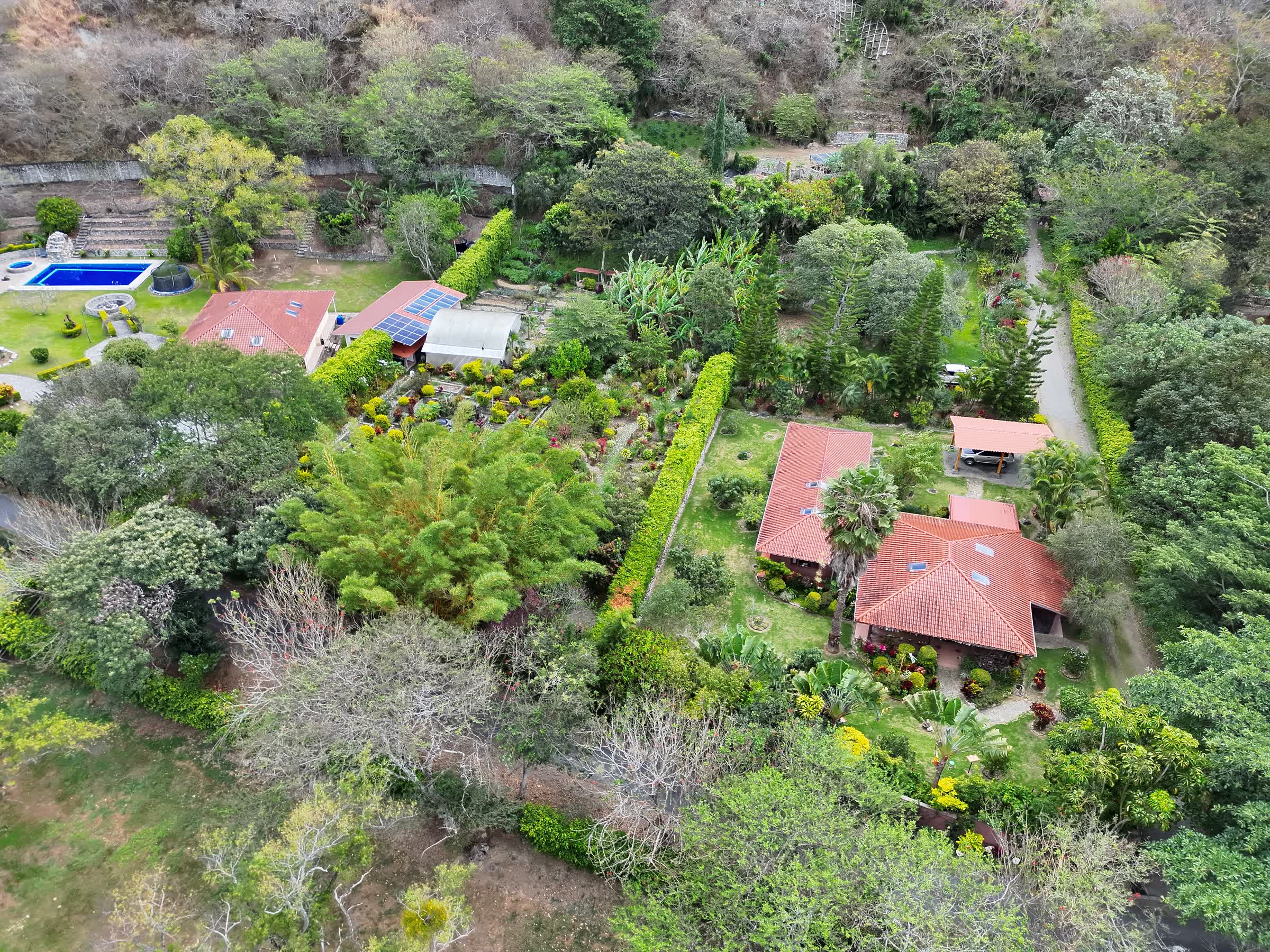
Water is one of the great natural assets of this property and, over the years, it has become an important part of the way we have chosen to live here. With extensive gardens, fruit trees, coffee, vegetables, greenhouses and bees, water touches almost everything we do. We are fortunate to have three independent sources, giving us an unusual degree of security and redundancy.
The first is the potable water system maintained by Hacienda San Joaquín. The community draws its water from the same underground water table that supplies the private wells within the Hacienda. It is passed through a multi-stage filtration system and treated with ozone before being distributed to the properties.
Our house is fully connected to this system, although we seldom need to use it. Our own water system normally supplies all of our household and garden requirements, so community water is generally used for only a few hours at a time while our equipment is undergoing routine maintenance. It nevertheless provides us with an immediately available independent source for drinking, bathing, washing and normal household use.
Our second source is the Vilcabamba River. A canal carrying river water passes directly through the property and is available as a backup source for irrigation should our primary system ever require extended maintenance. During the fourteen years we have lived here, that has never been necessary, but with so much of the property devoted to gardens and cultivation, we have always appreciated knowing that this additional source is there.
The heart of our water system, however, is our own well.
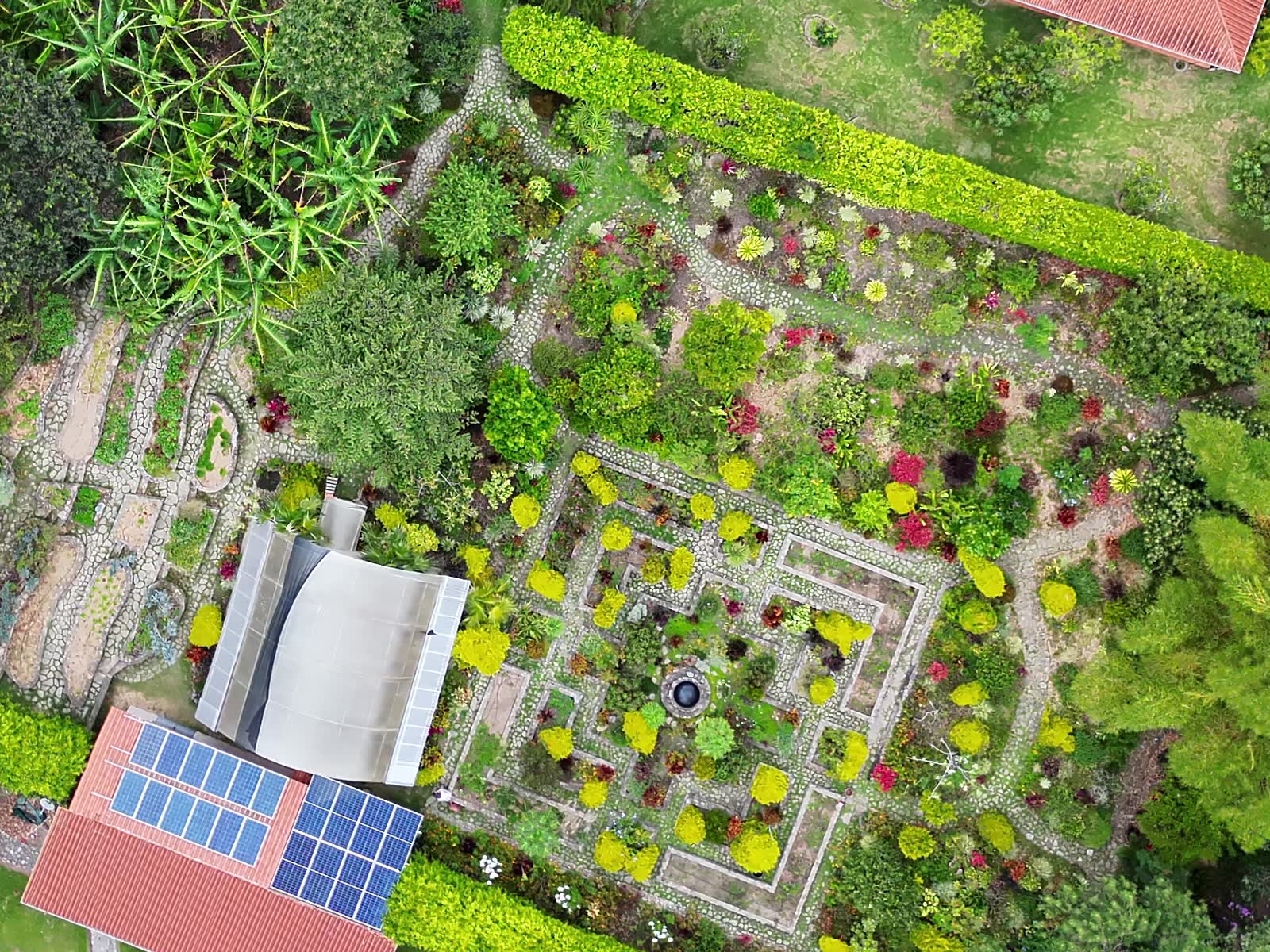
It is located in a rather unusual place: directly beneath the circular opening at the center of our Chakana Garden. From there, water is drawn from beneath our land and passed through three stages of filtration, including fine paper filtration, followed by ultraviolet treatment.
The purified water is then pumped approximately 40 meters (130 feet) above the level of the house and gardens to six storage tanks, each holding 2,500 liters. Together, they give us a reserve of 15,000 liters, or nearly 4,000 gallons. Their elevation also allows gravity to play an important role in maintaining pressure as the water makes its way back down to the house and gardens.
Before reaching them, however, the water passes through one additional part of the system that has been particularly important to us: our commercial-grade Crystal Blue AP-3 water structuring unit.
We installed the AP-3 because we wanted to pay attention not only to the purity and availability of our water, but also to its physical character. In nature, water seldom moves as it does through conventional pipes. Streams curve, spiral and form vortices as they move across the landscape. Water-structuring technologies are based, in different ways, on the idea that some of the characteristics associated with natural water movement can be restored after water has been pumped, pressurized and transported through plumbing.
The result is that virtually the entire living estate shares the same water. It is the water we drink and cook with, bathe and wash in, and it is also the water that nourishes our vegetables, coffee, fruit trees, ornamental gardens and the flowers visited by our bees.
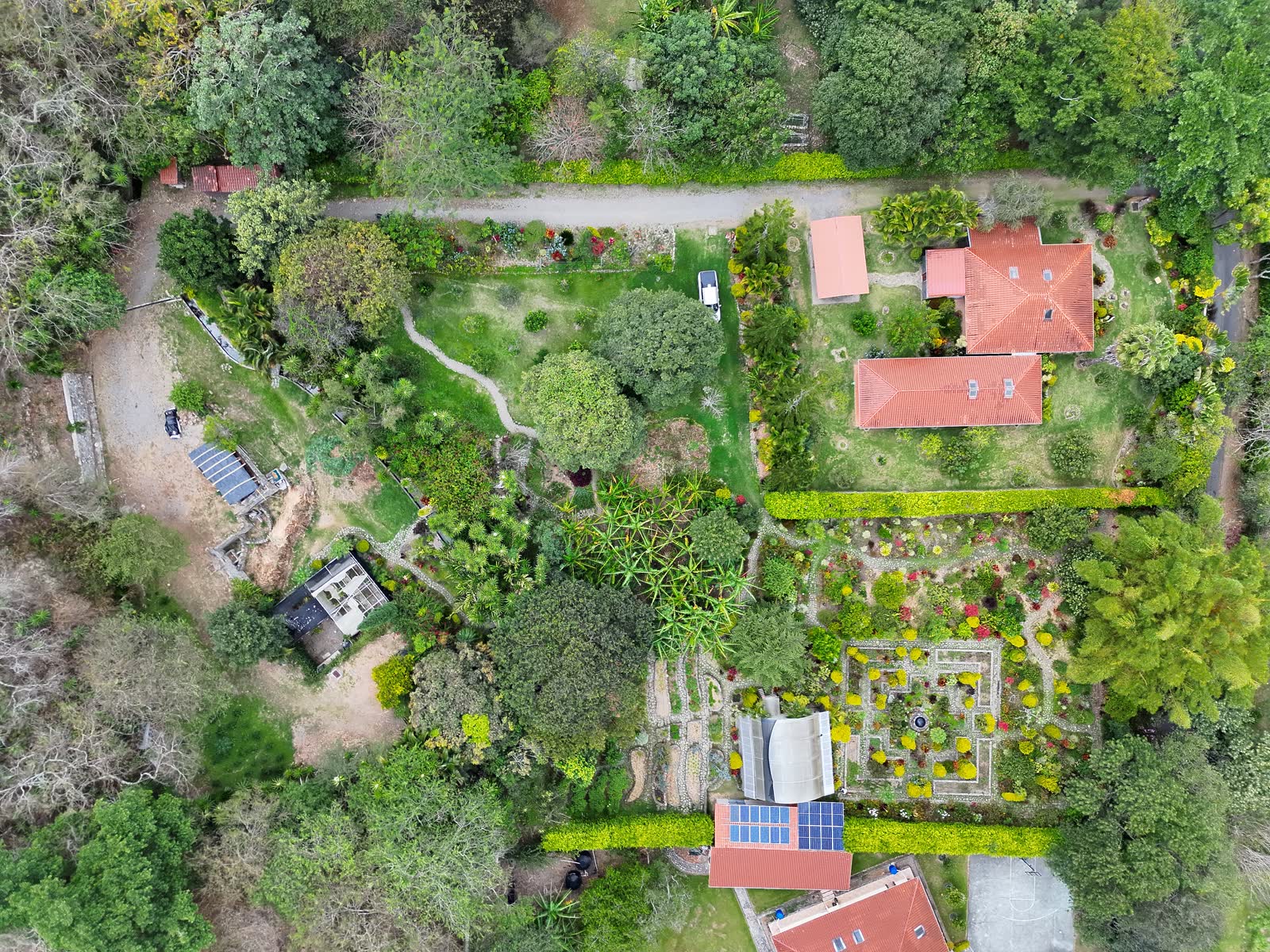
We would never suggest that structured water alone is responsible for what grows here. Vilcabamba's climate, our soil, abundant sunshine, careful cultivation and many years of attention have all played their parts. Nevertheless, we have been continually impressed by the vitality of the gardens and by the quality of what the land produces. There is something particularly satisfying in knowing that the same water sustaining us is also moving through the soil, the trees, the flowers and ultimately the entire ecology of the property.
That relationship is perhaps most apparent with our bees. The water nourishes the plants; the plants produce the flowers; the flowers feed the bees; and the bees give us the distinctive raw mountain honey produced here. We cannot scientifically attribute the remarkable taste of that honey to structured water, but we do regard the water as one element in the larger living system from which the honey comes.
There is also a rather simple testament to the water that means a great deal to us. Several of our neighbors regularly come to the property with five-gallon containers to fill with our water and take it home. After all the equipment, filtration and technology are described, perhaps that says more than anything else.
Over the years, we have come to think of our water system not simply as part of the property's infrastructure, but as part of our relationship with the land. Water rises from beneath the property, is filtered and purified, stored high above us, structured, and then returned to the house and gardens. From there it passes through us, through the soil and through virtually everything that grows here.
It is one of the quiet systems working behind the scenes that has helped make this property what it is.